6 - Sincronización en Java
La sincronización en Java se basa en monitores y en la palabra clave synchronized. Permite exclusión mutua y coordinación entre hilos que comparten memoria.
6.1 Bloques synchronized
- Monitor por objeto: cada objeto tiene un monitor que se adquiere al entrar en un bloque
synchronizedsobre él. - Exclusión mutua: solo un hilo puede ejecutar la sección crítica a la vez para el mismo lock.
- Usa locks privados: sincroniza sobre campos privados (por ejemplo,
private final Object lock = new Object();) para evitar interferencia externa. - Reentrancia: un mismo hilo puede reingresar al lock sin bloquearse; cuenta el número de entradas.
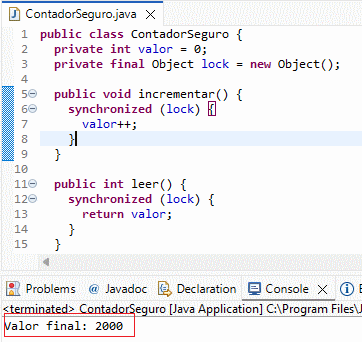
public class ContadorSeguro {
  private int valor = 0;
  private final Object lock = new Object();

  public void incrementar() {
    synchronized (lock) {
      valor++;
    }
  }

  public int leer() {
    synchronized (lock) {
      return valor;
    }
  }

  public static void main(String[] args) throws InterruptedException {
    ContadorSeguro contador = new ContadorSeguro();

    Runnable tarea = () -> {
      for (int i = 0; i < 1_000; i++) {
        contador.incrementar();
      }
    };

    Thread h1 = new Thread(tarea, "h1");
    Thread h2 = new Thread(tarea, "h2");
    h1.start();
    h2.start();
    h1.join();
    h2.join();

    System.out.println("Valor final: " + contador.leer()); // esperado: 2000
  }
}
Contraste con una versión sin sincronización para observar condiciones de carrera y resultados inconsistentes.
public class ContadorInseguro {
  private int valor = 0;

  public void incrementar() {
    valor++; // no sincronizado
  }

  public int leer() {
    return valor;
  }

  public static void main(String[] args) throws InterruptedException {
    ContadorInseguro contador = new ContadorInseguro();

    Runnable tarea = () -> {
      for (int i = 0; i < 1_000; i++) {
        contador.incrementar();
      }
    };

    Thread h1 = new Thread(tarea, "h1");
    Thread h2 = new Thread(tarea, "h2");
    h1.start();
    h2.start();
    h1.join();
    h2.join();

    System.out.println("Valor final inseguro: " + contador.leer());
  }
}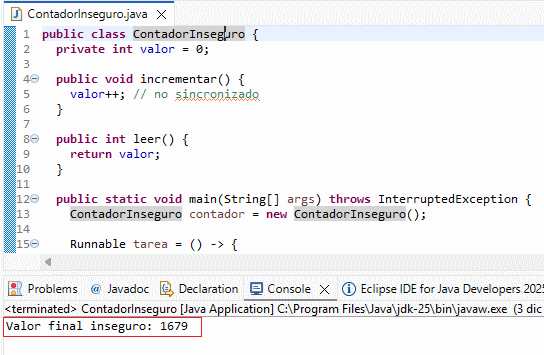
El resultado varía porque valor++ no es atómico: lee, incrementa y escribe en pasos separados. Sin exclusión mutua, los hilos pueden intercalar operaciones y perder actualizaciones (race condition), generando valores finales menores a 2000 y diferentes en cada corrida.
6.2 Métodos synchronized
- Bloqueo implícito en
this: los métodos de instancia sincronizados usan el monitor del objeto actual. - Riesgo de exponer el candado: si
thises accesible, otros códigos pueden sincronizar sobre el mismo monitor y afectar el orden. - Métodos estáticos sincronizados: bloquean sobre el objeto
Classcorrespondiente.
6.3 wait(), notify(), notifyAll()
- Reglas del monitor: solo se pueden invocar dentro de un bloque o método
synchronizedsobre el mismo objeto. - Esperas condicionales: usa un bucle
whilepara chequear la condición antes y después dewait()(maneja spurious wakeups). - Notificación:
notify()despierta un hilo;notifyAll()despierta a todos para recompetir por el lock.
Spurious wakeups son despertares espurios: un hilo puede salir de wait() sin haber sido notificado ni haberse cumplido la condición; por eso se reevalúa la condición dentro de un bucle while antes de continuar.
import java.util.LinkedList;
import java.util.Queue;
import java.util.concurrent.TimeUnit;

public class ColaPC {
  private final Queue<Integer> cola = new LinkedList<>();
  private final int capacidad = 5;

  public void producir(int valor) throws InterruptedException {
    synchronized (this) {
      while (cola.size() == capacidad) {
        wait(); // espera espacio
      }
      cola.add(valor);
      System.out.println("Producido: " + valor + " | tamaño=" + cola.size());
      notifyAll(); // hay datos
    }
  }

  public int consumir() throws InterruptedException {
    synchronized (this) {
      while (cola.isEmpty()) {
        wait(); // espera datos
      }
      int valor = cola.remove();
      System.out.println("Consumido: " + valor + " | tamaño=" + cola.size());
      notifyAll(); // hay espacio
      return valor;
    }
  }

  public static void main(String[] args) throws InterruptedException {
    ColaPC buffer = new ColaPC();

    Runnable productor = () -> {
      for (int i = 1; i <= 10; i++) {
        try {
          buffer.producir(i);
          TimeUnit.MILLISECONDS.sleep(150);
        } catch (InterruptedException e) {
          Thread.currentThread().interrupt();
          return;
        }
      }
    };

    Runnable consumidor = () -> {
      for (int i = 1; i <= 10; i++) {
        try {
          buffer.consumir();
          TimeUnit.MILLISECONDS.sleep(250);
        } catch (InterruptedException e) {
          Thread.currentThread().interrupt();
          return;
        }
      }
    };

    Thread tProd = new Thread(productor, "productor");
    Thread tCons = new Thread(consumidor, "consumidor");
    tProd.start();
    tCons.start();
    tProd.join();
    tCons.join();
    System.out.println("Proceso completado");
  }
}
Partes esenciales del ejemplo:
- Lock implícito en
this: los métodos usansynchronized (this)para proteger la cola. - Esperas condicionales: el productor espera espacio (
whilehasta que haya capacidad); el consumidor espera datos (whilehasta que no esté vacío). - Notificación:
notifyAll()despierta a productores y consumidores para recompetir por el lock tras un cambio. - Bucles finitos: ambos hilos recorren 10 iteraciones, lo que permite que el programa termine y podamos ver el flujo completo.
- Pausas intencionales: los
sleepayudan a observar el intercalado y facilitan reproducir el patrón productor-consumidor.